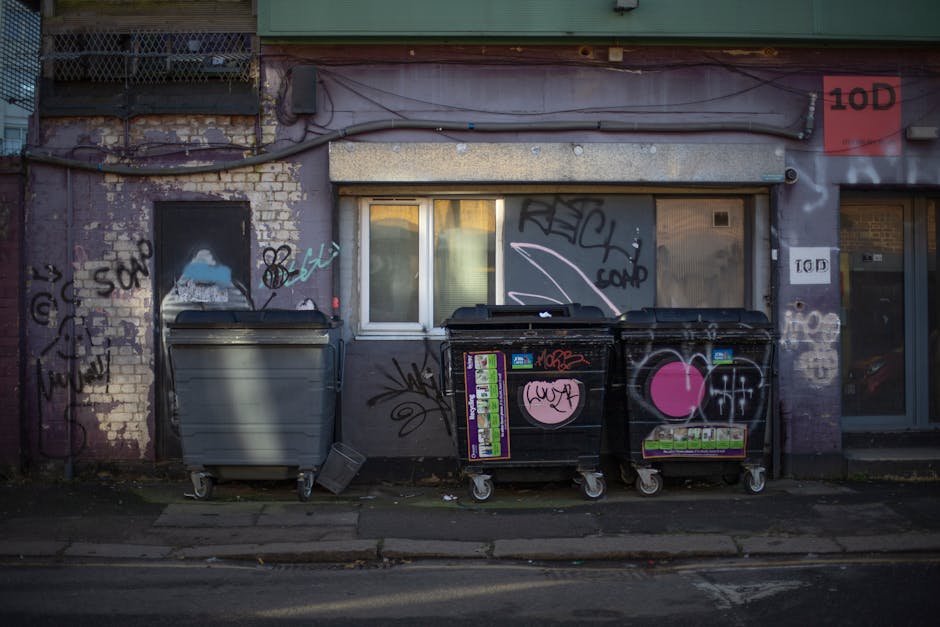
Business rubbish for Elephant & Castle shops and offices
If you run a shop, cafe, agency, clinic, or office near Elephant & Castle, rubbish builds up faster than most people expect. Cardboard boxes, broken fixtures, old desks, food waste, packaging, display material, and end-of-life equipment can quietly take over valuable space. Business rubbish for Elephant & Castle shops and offices is not just about "getting rid of stuff"; it is about keeping the premises safe, presentable, and workable without turning the back room into a storage disaster.
This guide explains what business rubbish removal involves, how it works in practice, what to watch out for, and how to choose a sensible approach for a busy commercial space. If you have ever opened a stockroom door and thought, "Right, this again," you are in the right place.
Table of Contents
- Why it matters
- How it works
- Key benefits
- Who needs this service
- Step-by-step guidance
- Expert tips
- Common mistakes to avoid
- Tools, resources and recommendations
- Law, compliance and best practice
- Options and comparison
- Real-world example
- Practical checklist
- Conclusion
- Frequently asked questions
Why Business rubbish for Elephant & Castle shops and offices Matters
In a dense part of London, space is money. A few bin bags in the wrong corner can shrink a stockroom, block a fire exit, or make a reception area feel untidy before the first customer has even walked in. That matters for shops because presentation affects trust. It matters for offices because clutter affects focus, safety, and how quickly your team can move around.
Elephant & Castle is a fast-moving commercial area, so many businesses operate in tight units, shared buildings, or mixed-use premises. That usually means rubbish has to be managed carefully, not casually. A pile of old packaging or unwanted furniture is not "just background noise" for long. It becomes a nuisance, then a hazard, then a job that eats up a whole afternoon.
There is also the practical side. Business rubbish often includes a mix of general waste, recyclable materials, and bulky items. If you treat everything the same, you may waste money and time. If you separate it properly and plan the removal sensibly, the whole place runs better. Truth be told, good waste management is one of those unglamorous things that quietly improves everything else.
Expert summary: The best business rubbish plan is not the one that looks neat on paper. It is the one that keeps your premises safe, clears space quickly, and fits the way your shop or office actually operates.
For businesses that need recurring support, it can also make sense to look at business waste removal as part of a broader clearance routine, especially where stock turnover, refurbishment, or office churn creates regular waste.
How Business rubbish for Elephant & Castle shops and offices Works
The process is usually more straightforward than people expect, though the details matter. In simple terms, you identify what needs to go, choose a removal method, arrange access, and ensure the waste is handled appropriately. That sounds obvious. It often isn't, once you are dealing with a busy trading day, awkward stairwells, or a room full of mixed junk that nobody has had time to sort.
For a small shop, the job might involve mixed commercial rubbish, packaging, damaged shelving, a tired counter, and a few old stock items. For an office, it may be desks, chairs, filing cabinets, monitors, cables, storage boxes, and general waste from a move or refurbishment. Some clearances are one-off; others happen after fit-outs, seasonal changes, or a lease handback.
Usually, the sensible approach is:
- identify the waste type and volume
- decide what can be reused, recycled, or disposed of
- check access routes, lift use, parking, and timing
- book a collection or clearance slot that will not disrupt trading too much
- make sure the provider can handle the load safely and lawfully
Some businesses only need help with a few bulky items. Others need a more complete clearance, especially if an office is being reconfigured or a shop is closing, relocating, or changing use. In those cases, related services such as office clearance or waste removal can help you match the service to the job rather than forcing a one-size-fits-all solution.
And yes, timing matters. A clearance at 7 a.m. before customers arrive can be very different from one at 2 p.m. when deliveries are moving in and out. If you have ever tried to wheel a heavy cabinet through a narrow corridor while someone is asking where the printer cable went, you will know what I mean.
Key Benefits and Practical Advantages
Good business rubbish management brings more than a tidy floor. It supports the daily rhythm of the premises, and that is the bit many people underestimate.
- Better use of space: stockrooms, back offices, and storage areas stop becoming overflow zones.
- Safer working conditions: fewer trip hazards, less blocked access, and less lifting around clutter.
- Cleaner customer impression: especially important in retail, hospitality, and front-of-house spaces.
- Less staff time lost: your team can get on with work rather than wrestling with bins and bulky waste.
- Improved recycling outcomes: sorting suitable materials separately can reduce avoidable landfill.
- Less disruption during moves or refurbishments: a managed clearance is easier to coordinate than improvised rubbish shuffling.
There is also a mental benefit. A cluttered workplace makes small problems feel bigger. A clear back room, on the other hand, tends to calm everything down a notch. It is a bit like clearing a kitchen sink before starting dinner - suddenly the whole job feels more manageable.
For businesses replacing furniture or old display pieces, it can be useful to pair rubbish removal with furniture disposal or furniture clearance so bulky items are removed without unnecessary handling.
Who This Is For and When It Makes Sense
This topic is relevant to a lot more businesses than people first think. If your premises generate waste, you are in scope. Simple as that.
Typical users include:
- retail shops clearing packaging, damaged stock, or old shelving
- offices getting rid of desks, chairs, archive boxes, and IT waste
- cafes and takeaway units managing cardboard, mixed rubbish, and old equipment
- salons, clinics, and studios dealing with packaging, storage clutter, and worn furniture
- landlords and managing agents arranging end-of-tenancy business clearances
- contractors and fit-out teams needing builder-style waste support after works
It makes sense when rubbish starts causing one of three things: clutter, delay, or risk. If none of those are happening, you may only need light ongoing waste management. But if the waste is taking over a room or making it harder to trade, it is probably time to act.
Some businesses also need occasional support for non-standard waste. A shop refit might produce plasterboard, timber offcuts, packaging, and broken fittings. In that case, a related service like builders waste clearance may be more suitable than a simple bin uplift. Not every job fits in the same bucket, and frankly that is where people get tripped up.
Step-by-Step Guidance
If you are trying to handle business rubbish properly without overcomplicating it, this is a workable sequence.
- Walk the site slowly. Check the shop floor, rear storage, office corners, under desks, cupboards, and loading areas. Waste hides in plain sight.
- Sort the items into rough groups. General rubbish, cardboard, recyclable materials, bulky furniture, electrical items, and anything that may need special handling.
- Decide what stays. Sounds basic, but it saves mistakes. A surprising amount of waste is really just "we were not sure if we needed this."
- Measure access. Doors, staircases, lifts, parking restrictions, and opening hours all affect the job.
- Choose the removal method. Small volume, large volume, one-off clearance, or regular business waste removal.
- Book a suitable time. Aim for the least disruptive window, even if it means early morning or after close.
- Prepare the area. Keep walkways clear and isolate anything fragile or confidential.
- Confirm what happens to the waste. You want a provider that can explain disposal and recycling clearly.
If records, client files, or sensitive paperwork are involved, separate those early. Do not leave confidential material sitting in the same pile as old cardboard. That is asking for trouble, and nobody needs the headache.
Expert Tips for Better Results
These are the small things that make a commercial clearance smoother. They are not flashy, but they matter a lot.
- Keep waste types separate where possible. Cardboard, general rubbish, and bulky furniture are easier to manage when they are not mixed.
- Label what is leaving. A bit of tape or a marker pen can prevent confusion on the day.
- Protect floors and corners. Commercial spaces often have tight turns and polished surfaces that mark easily.
- Plan around trading patterns. A ten-minute delay can become a longer disruption if it lands in a delivery window.
- Keep receipts and paperwork. Even if you never need them, they are useful for internal records.
- Ask about recycling first. It is often easier to recycle items when they are sorted at source.
One practical tip many businesses overlook: take photos before the work starts. Nothing dramatic, just a few quick pictures. They help with internal planning, landlord discussions, and keeping everyone aligned on what is actually being removed. A tiny thing, but surprisingly useful.
If your clearance includes old chairs, desks, or storage items that are still structurally sound but no longer needed, ask about reuse or donation routes before everything is treated as disposable waste. It may not always be possible, but it is worth raising.
Common Mistakes to Avoid
Most clearance problems come from assumptions. The job looks easy from the outside, so people leave it too late or underestimate the volume. Then the afternoon disappears.
- Leaving the job until the space is unusable. By then, staff are working around the clutter rather than using the space properly.
- Mixing everything together. That can make recycling harder and slow down removal.
- Ignoring access issues. Small lifts, tight staircases, and parking restrictions are real-world problems, not minor details.
- Forgetting about confidential waste. Paper records need separate handling.
- Assuming all rubbish is the same. It is not. Electricals, furniture, packaging, and construction debris may need different handling.
- Not checking provider terms. You want clarity on what is included, what is excluded, and how the waste will be dealt with.
Another classic mistake: asking one member of staff to "just deal with it" without giving them time, gloves, bins, or a plan. Brave? Maybe. Efficient? Not really.
Tools, Resources and Recommendations
You do not need a complicated system to manage commercial rubbish well. A few simple tools make a big difference.
- Label printer or marker pens: useful for identifying waste streams and items to keep.
- Basic inventory list: especially helpful for offices clearing desks, chairs, monitors, or archives.
- Photographs: useful for planning and record-keeping.
- Reusable crates or bins: better than loose piles for small items and sorting.
- Gloves and sturdy footwear: especially if staff are helping with prep work.
From a service standpoint, many businesses compare broader waste removal with more focused clearance services depending on the type of waste they produce. If you are clearing a whole floor or a full office, the more specialist route is often easier. If you just need recurring commercial waste taken away, a lighter-touch arrangement may be enough.
It can also help to review the provider's recycling and sustainability approach if you care about how mixed waste is separated and handled. Not every business can prioritise this equally, but many do, and rightly so.
Law, Compliance, Standards, or Best Practice
Commercial rubbish is not something to improvise around. In the UK, businesses have a duty to manage their waste responsibly, keep it secure, and avoid causing nuisance or safety issues. The exact obligations can vary by waste type and business setup, so it is wise to treat compliance as a practical part of operations rather than a box-ticking exercise.
For shops and offices in Elephant & Castle, the main best-practice points are straightforward:
- keep waste stored safely and accessibly
- do not block exits, corridors, or fire routes
- separate reusable or recyclable materials where possible
- handle confidential documents carefully
- use a provider that can explain safe loading, transport, and disposal
- make sure staff know what can and cannot go into the business waste stream
If your premises involve refurbishment waste, electrical items, or heavy furniture, you should expect a more careful process than you would for ordinary daily rubbish. That is normal. Good providers should also be transparent about safety, insurance, and access management. If you want a feel for how a company approaches this, pages like health and safety policy, insurance and safety, and terms and conditions are worth reviewing before booking.
One thing to keep in mind: compliance is not only about avoiding problems. It also protects your staff, your customers, and your working rhythm. That counts for a lot more than people admit.
Options, Methods, or Comparison Table
Different businesses need different approaches. Here is a simple comparison to help you think it through.
| Method | Best for | Strengths | Limitations |
|---|---|---|---|
| Internal staff clear-up | Very small volumes of light rubbish | Low immediate cost, quick for tiny jobs | Uses staff time, may be unsafe for bulky items, easy to underestimate the work |
| Regular business waste collection | Ongoing shop or office waste | Predictable, convenient, good for day-to-day operations | Not ideal for bulky items or one-off clearances |
| One-off commercial clearance | Moves, refits, closures, back-room clean-outs | Fast, coordinated, suited to bulky mixed waste | Requires planning and access coordination |
| Specialist clearance for bulky items | Furniture, shelving, stockroom items, office equipment | Better for heavy or awkward waste, less disruption | May not suit simple bin-only waste |
For many Elephant & Castle businesses, the best answer is a mix: regular waste management for ongoing rubbish, plus a separate clearance when furniture, stock, or equipment needs to go. That hybrid approach is often the most practical. A bit boring, maybe, but very effective.
Case Study or Real-World Example
Imagine a small office above a retail unit near Elephant & Castle station. The team has been growing, and the place now has extra chairs, old monitors, stacked boxes, and a filing cabinet that nobody opens anymore. Nothing is disastrous, but the room feels tighter every week.
Instead of waiting until the situation gets worse, they book a clearance for a quieter morning. Before the visit, the team sorts paperwork from general waste, identifies which desks and chairs are leaving, and clears the corridor so access is easy. They also separate cardboard from mixed rubbish, which makes the process smoother.
The result is simple: more usable floor space, a less cramped work area, and fewer interruptions when staff move around. The biggest win is not the removal itself. It is the fact that the office feels usable again. You notice it right away when you walk in - less noise, less clutter, more room to breathe.
That kind of reset is common after a move, a rebrand, a lease event, or a quiet seasonal stock purge in a shop. Not dramatic. Just sensible.
Practical Checklist
Use this checklist before arranging business rubbish removal for a shop or office.
- Walk through the premises and identify every waste area
- Separate general rubbish from recyclable materials
- Flag bulky furniture, electrical items, and anything unusually heavy
- Remove or isolate confidential paperwork
- Check loading access, stairs, lifts, and parking constraints
- Choose a time that does not clash with deliveries or peak trading
- Confirm what the provider can take and how it will be handled
- Protect floors, walls, and fragile fixtures where needed
- Keep key staff informed on the day
- Review the cleared space afterwards and decide what prevention steps are needed next
If the list feels a bit much, start with the first three items. That is usually enough to get moving. The rest can follow.
Get a free quote today and see how much you can save.
Conclusion
Business rubbish for Elephant & Castle shops and offices is really about control: controlling clutter, controlling risk, and controlling how smoothly your premises function day to day. Whether you are clearing a back room, refreshing an office, or dealing with a mixed pile of commercial waste, the aim is the same - keep the space practical and keep the process calm.
The businesses that handle waste well tend to look more organised, feel less stressed, and make better use of their space. Nothing flashy. Just fewer headaches. And in a busy part of London, that is worth a lot.
If you are planning a clearance or weighing up your options, a sensible next step is to review your waste volume, access needs, and timing, then choose the approach that fits the way your business actually works. Simple, steady, done properly.
Sometimes the best improvement is just getting the room back.
Frequently Asked Questions
What counts as business rubbish in a shop or office?
Business rubbish usually includes general waste, cardboard, packaging, broken furniture, redundant office equipment, old stock, and similar materials created through trading or office activity.
Is business rubbish removal different from household clearance?
Yes. Commercial waste often involves heavier volumes, more mixed materials, tighter timing, and a greater need to manage access, safety, and business continuity.
How do I know whether I need waste removal or office clearance?
If you mainly need routine collection of day-to-day rubbish, waste removal may be enough. If you are clearing bulky items, furniture, archives, or a whole workspace, office clearance is usually more suitable.
Can shop waste be cleared without disrupting trading?
Usually, yes. Good planning helps a lot. Early-morning, late, or off-peak collections are often easier for active shops and offices.
What should I do with old office furniture?
Separate it from general rubbish and plan for a clearance that can handle bulky items safely. If the furniture is still usable, ask whether reuse or separate handling is possible.
Do I need to sort cardboard from general waste?
It is strongly recommended. Sorting cardboard and recyclables separately can make the whole process cleaner, quicker, and more efficient.
What about confidential paperwork?
Keep confidential files separate from ordinary waste. Do not place sensitive papers in mixed rubbish unless you are certain they will be handled appropriately.
How far in advance should I arrange a clearance?
For small jobs, a short lead time may be fine. For larger shop or office clearances, especially with access constraints or bulky items, book as early as you reasonably can.
Will I need to stop trading during the clearance?
Not always. Many clearances can be done around opening hours, but the answer depends on access, noise, volume, and how much space the items take up.
What if the rubbish includes items from a refit or renovation?
Then you may need a more specialised solution, especially if the waste includes timber, plasterboard, fixtures, or mixed construction debris. In that situation, builders waste clearance can be more appropriate.
How can I reduce business rubbish in the first place?
Use better stock planning, reuse packaging where possible, review ordering habits, and set up clearer sorting points for staff. Small changes usually have the biggest effect over time.
What should I ask a provider before booking?
Ask what they can take, how access is handled, whether recycling is part of the process, what paperwork is provided, and how they approach safety and insurance. That keeps expectations clear from the start.
Is this useful for small independent businesses too?
Absolutely. In fact, smaller businesses often feel clutter more quickly because they have less spare space. A single clearance can make a noticeable difference.