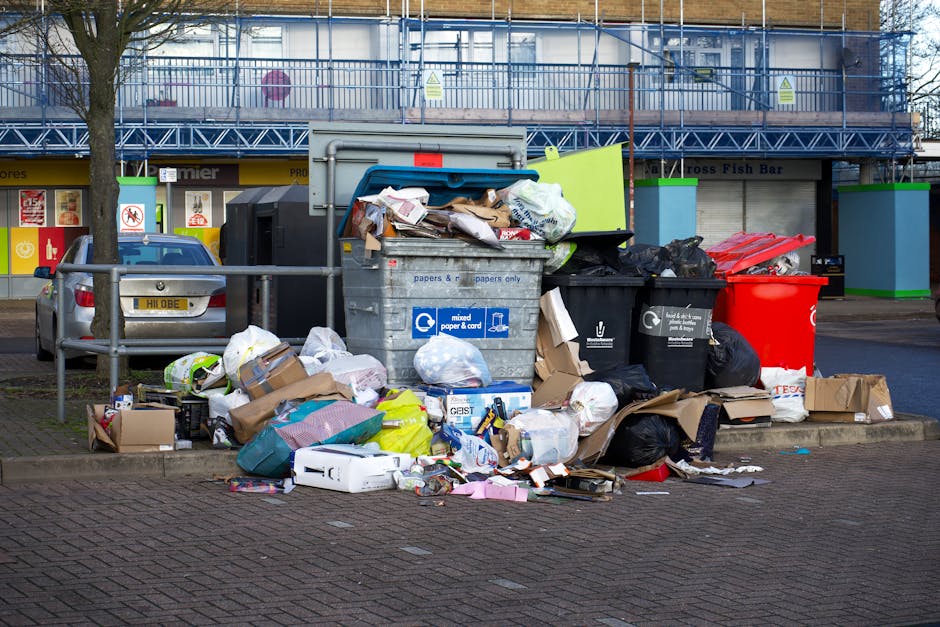
Cheap vs licensed rubbish removal in Elephant and Castle: costs
If you are comparing cheap vs licensed rubbish removal in Elephant and Castle: costs can look similar at first glance, and that is exactly where people get caught out. A low quote sounds good on a busy day when the front room is full of bags, an old sofa is blocking the hall, and you just want the place cleared. But the cheapest option is not always the cheapest in the real world.
This guide breaks down what affects rubbish removal prices, what licensed services usually include, where cheap services can go wrong, and how to judge value without overpaying. We will keep it practical, local, and plain English. No fluff. Just the bits that matter when you need the job done properly in Elephant and Castle.
For readers who want a broader service overview alongside pricing guidance, you may also find the site's waste removal service and pricing and quotes pages useful while you compare options.
Table of Contents
- Why cheap vs licensed rubbish removal in Elephant and Castle matters
- How rubbish removal pricing and licensing work
- Key benefits and practical advantages
- Who this is for and when it makes sense
- Step-by-step guidance
- Expert tips for better results
- Common mistakes to avoid
- Tools, resources and recommendations
- Law, compliance, standards, or best practice
- Options, methods, and comparison table
- Case study or real-world example
- Practical checklist
- Conclusion
- Frequently asked questions
Why cheap vs licensed rubbish removal in Elephant and Castle matters
Let's face it: most people start with price. That is normal. If you have a pile of mixed rubbish, a broken wardrobe, or builders' offcuts stacked by the door, you want it gone without paying silly money. But rubbish removal is one of those services where the headline quote can hide a lot.
In Elephant and Castle, space is tight, parking can be awkward, and access is often not straightforward. A service that looks cheap on paper may become expensive once the team arrives and realises they need extra labour, more time, or a second load. That is before you even get to the bigger issue: unlicensed clearance can leave you exposed if waste is fly-tipped or handled badly.
A licensed service is usually priced a little higher because the operator is paying for proper waste handling, disposal routes, paperwork, fuel, labour, and business overheads. That sounds boring, but it is exactly why the job tends to run smoother. Cheap removal may work fine for tiny, predictable jobs. Once the load gets bigger or more awkward, the gaps show quickly.
There is also a trust angle. If a business is set up properly, you can ask sensible questions about where the waste goes, how it is loaded, and how any mixed materials are separated. That matters if you care about recycling, safety, or simply not having to chase someone three days later because they disappeared with your deposit. Not ideal, to be honest.
For homes and flats in the area, the question is not only "what is the price?" but "what is the actual cost after everything is included?" That is the real comparison.
How cheap vs licensed rubbish removal in Elephant and Castle: costs works
Rubbish removal costs usually depend on a mix of volume, weight, labour, access, vehicle size, and waste type. A cheap operator may quote a low base price and then add extras. A licensed operator may appear pricier at first, but often gives a clearer all-in figure. That difference is easy to miss when you are skimming messages on your phone in a rush.
Here is the basic flow most people see:
- You describe the waste, ideally with photos.
- The company estimates the load size and access difficulty.
- A quote is given, sometimes with a range if the job is still unclear.
- The team arrives, confirms the waste, and completes the clearance.
- The waste is transported and disposed of through appropriate channels.
Cheap rubbish removal services often lean on speed and simplicity. That can work for a few black bags or one bulky item. The issue comes when the job changes on site. Suddenly the quote grows, and the "cheap" bit has gone missing. Licensed services are more likely to ask better questions upfront because they need to match the job to the right process, especially if there is furniture, electrical waste, construction debris, or mixed household items.
If you are clearing a flat, a loft, a garage, or a whole house, the price can vary quite a bit. A top-floor flat with no lift and a narrow stairwell is not the same as a ground-floor collection with easy parking. The extra walking time matters. So does carrying waste down two flights of stairs while trying not to knock a light fitting off. Small details, big difference.
In practice, licensed rubbish removal often feels more structured. Cheap removal can feel more flexible. That sounds convenient, but flexibility is only helpful if it does not turn into a surprise charge halfway through.
Key benefits and practical advantages
There are real advantages to each route, depending on the job. The trick is knowing which advantage actually matters to you.
Why cheap rubbish removal appeals
- Lower starting price for straightforward jobs
- Useful for small, low-risk clearances
- Quick to arrange when you need an immediate response
- Sometimes suitable for one-off bulky items or tidy loads
Why licensed rubbish removal is usually better value
- More transparent handling of waste
- Reduced risk of hidden charges
- Better suited to mixed or heavier loads
- Usually more reliable for flats, commercial premises, and awkward access
- Greater peace of mind if you want the waste dealt with properly
The biggest practical benefit of a licensed service is consistency. You tend to know what is included, who is doing the work, and what happens after collection. That matters for busy households and businesses alike. A cheap quote can still be fine, of course. But the value comes from knowing exactly what you are buying.
If the clearance involves furniture, it can help to compare a broader furniture clearance approach with a more item-specific furniture disposal service. Sometimes the cheapest option is not the same as the simplest option.
And if you are dealing with a mixed property clearance, broader services such as home clearance, house clearance, or flat clearance can be more cost-effective than booking several tiny collections. That is one of those boring-but-useful truths.
Who this is for and when it makes sense
This topic matters to a lot of different people, not just homeowners doing a spring clean. In Elephant and Castle, the mix of flats, rentals, offices, refurbishments, and short turnaround moves means rubbish builds up in all sorts of ways.
You may be weighing up cheap versus licensed rubbish removal if you are:
- Clearing out after a tenancy ends
- Getting rid of old furniture before a move
- Removing builder's waste after small works
- Emptying a loft, garage, or spare room
- Running a business and need waste removed quickly
- Dealing with a larger house or office clearance
- Trying to avoid repeated trips to the tip and the hassle that goes with them
For business premises, the balance often tilts toward licensed removal because the waste stream is more varied and the risk of disruption is higher. A business can ill afford a dodgy clearance job that leaves rubbish in the back lane or causes a complaint. If that sounds familiar, a service like business waste removal or office clearance is usually a better fit than a purely "cheap" ad hoc collection.
For homes, the decision often comes down to urgency and volume. If you only have a few items and you can verify what is included, a budget option may be fine. If the job is messy, bulky, or time-sensitive, licensed clearance tends to save stress. Stress has a cost too, even if it never appears on an invoice.
Step-by-step guidance
If you want to compare costs properly, do it methodically. A quick chat on the phone is not always enough.
- List the waste clearly. Separate furniture, bags, rubble, electrical items, garden waste, and anything sharp or awkward.
- Take photos in good light. Morning light by the window is surprisingly helpful. The clearer the photos, the better the quote.
- Ask what is included. Labour, loading, disposal, parking, congestion, and stairs should all be clear.
- Check whether the company is licensed. If the answer is vague, that is a warning sign.
- Confirm access details. Lift access, driveway space, parking restrictions, and floor level all affect cost.
- Compare like for like. A cheap quote that excludes disposal is not the same as a full-service price.
- Put the agreement in writing. Even a short written confirmation helps avoid confusion later.
A useful trick is to ask two questions that get past the sales patter: "What could make the price change?" and "What happens if the load is exactly as described?" Those questions quickly reveal whether you are dealing with a straight answer or a slippery one. You will notice the difference.
If the job includes old sofas, wardrobes, mattresses, or mixed household clutter, it can be worth checking the company's broader home clearance or furniture clearance options. Sometimes a service built for a bigger clearance gives better value than a patchwork of cheap collections.
Expert tips for better results
Here are the tips that tend to save people money without cutting corners. Nothing dramatic. Just the good habits that add up.
- Group your waste by type. Mixed loads are fine, but separating simple items can reduce handling time.
- Be honest about volume. Understating the job usually backfires.
- Plan access before the team arrives. Move cars if needed, unlock gates, and clear hallways.
- Avoid "pay cash and no paperwork" offers. Cheap today can become expensive tomorrow.
- Get clarity on recycling. A reputable provider should be able to explain the general route your waste takes.
- Use a service matched to the property type. Flats, houses, lofts, garages, and gardens all clear differently.
To be fair, the best quote is not always the lowest one. It is the one that survives contact with the real job. If your rubbish is already stacked in the hallway and the van can park close by, cheap may work brilliantly. If the clearance is on the fourth floor after a rainy afternoon and a bin store is involved, you want a team that knows what they are doing. Rain, stairs, awkward corners. That is where experience shows.
For more complex clearances, a dedicated builders waste clearance service may be more appropriate than a general cheap collection, especially if rubble, timber, plasterboard, or renovation debris are mixed together.
Common mistakes to avoid
The biggest mistake is assuming every rubbish removal service is doing the same job for different prices. They are not.
- Choosing the lowest quote without checking the detail. Hidden extras can erase any saving.
- Not asking about licensing. This is one of those checks that takes one minute and can save a lot of grief.
- Forgetting access costs. Narrow stairs, no parking, and extra loading distance all matter.
- Mixing up rubbish removal with specialist disposal. Some items need the right handling route.
- Booking too late. If you are moving out or handing back keys, last-minute pressure usually pushes the price up.
- Ignoring terms and conditions. A short read now beats an argument later.
There is also a subtler mistake: judging value only by "how fast can you get here?" Speed is useful, sure. But speed without proper handling is just a rushed mistake. And nobody wants that on a Monday morning, least of all the neighbours.
Tools, resources and recommendations
You do not need specialist equipment to compare rubbish removal, but a few simple tools make the process easier.
- Phone camera: good for clear photos of the waste and access points
- Notes app: useful for listing items and quantities
- Measuring tape: handy if you are unsure how much space the load takes up
- Calendar or reminder app: helps line up collection with moving day or end-of-tenancy deadlines
- Written quote or message thread: keeps the agreed scope clear
As a practical recommendation, review the provider's insurance and safety information and health and safety policy if those pages are available to you. They are not exciting reading, admittedly, but they do tell you a lot about professionalism. So does a clear recycling and sustainability approach, especially if you care where the waste goes after collection.
If you are comparing companies, you may also want to read the about us page to get a sense of how the business presents itself. Not every decent company shouts about itself, but the tone usually tells you something. Trust your instincts a bit.
Law, compliance, standards, or best practice
Waste removal in the UK sits in a regulated environment, so compliance matters. You do not need to become a legal expert to book a clearance, but you should expect the company to operate responsibly and to know how waste should be handled.
In plain English, best practice means:
- Waste is collected, transported, and disposed of responsibly
- The operator can explain how loads are handled
- Hazardous or specialist items are treated carefully
- Customers are not left guessing about the process
- Documentation and business terms are available when needed
For you, the practical takeaway is simple: do not let a cheap quote distract you from basic checks. If the provider cannot explain how they work, or cannot answer straightforward questions about disposal, that is not just a pricing issue. It is a risk issue.
It is also sensible to review the company's terms and conditions and complaints procedure. These pages are not there for decoration. They show how a business handles misunderstandings, disputes, and service standards. The boring pages are often the useful ones.
Options, methods, and comparison table
Here is a simple comparison to help you weigh up cheap and licensed rubbish removal without getting lost in marketing language.
| Option | Typical appeal | Cost profile | Risk level | Best for |
|---|---|---|---|---|
| Very cheap unlicensed clearance | Lowest headline price | May look cheapest, then rise with extras | Higher | Only very small, simple jobs where the operator is fully transparent |
| Licensed budget service | Reasonable price with proper handling | Often mid-range and clearer | Lower | Homes, flats, mixed waste, and most standard clearances |
| Licensed full-service clearance | More complete support | Usually higher upfront, but predictable | Lowest | Heavier loads, awkward access, offices, lofts, garages, and time-sensitive jobs |
A useful rule of thumb: if the waste is easy, visible, and small, a cheap option may be fine. If the job involves stairs, mixed items, or any chance of extra labour, the licensed route usually wins on value. Not always on price, but on value. There is a difference.
For property-specific jobs, think in service categories rather than "rubbish" in the abstract. A garage clearance, loft clearance, or garden clearance can involve very different labour patterns and disposal mixes. The better the match, the cleaner the pricing.
Case study or real-world example
A landlord in Elephant and Castle needed a one-bedroom flat cleared after a tenant move-out. The visible waste looked modest: a broken bed frame, a small sofa, several bags of mixed items, and some kitchen bits. The first cheap quote was appealing, especially because it was quick. But once the provider asked about stairs, parking, and whether the mattress needed removing too, the price started creeping.
Another company provided a clearer quote based on photos, confirmed the access situation, and explained what was included. The second quote was higher at first glance, but there were no surprises on the day. The team arrived, loaded the items, and the flat was cleared in one go. In that case, the "cheaper" option would probably have cost more in stress and back-and-forth than it saved in money.
That is the pattern you see a lot. Cheap is attractive when the job is tiny and obvious. Licensed becomes better value when the job is real-life messy, which, let's be honest, is most clearances.
Practical checklist
Use this before you book any rubbish removal service.
- Have you listed every item clearly?
- Have you taken photos from more than one angle?
- Do you know whether the quote includes loading and disposal?
- Have you asked about extra charges for stairs or difficult access?
- Have you checked that the operator is licensed and insured?
- Have you read the terms, at least the parts about price changes?
- Do you know when the collection will happen and how long it may take?
- Have you matched the service type to the job type?
- Have you considered recycling and responsible disposal?
- Are you comparing total value rather than just the first number you saw?
If you can tick most of those boxes, you are in good shape. If not, pause for ten minutes and gather the missing details. It is boring admin, yes. But it saves cash.
Conclusion
When you compare cheap vs licensed rubbish removal in Elephant and Castle: costs are only part of the picture. The real decision is about certainty, access, scale, and risk. A cheap collection can be perfectly sensible for a small, straightforward job. But once the clearance gets bigger, more awkward, or more time-sensitive, a licensed service usually gives better value and fewer headaches.
The best approach is simple: describe the waste properly, check what is included, compare like for like, and choose the provider that gives you the clearest all-in answer. That is usually where the real savings are. Not in the lowest sticker price, but in avoiding surprise charges, delays, and the weird little problems that tend to show up at the worst moment.
Get a free quote today and see how much you can save.
For a service rooted in local knowledge and practical clearing support, you can also explore the company's approach to recycling and sustainability and the broader waste removal service information. A calm, well-planned clearance makes life easier, and sometimes that is worth more than the smallest saving on paper.
Frequently Asked Questions
Is the cheapest rubbish removal always the worst option?
No. For a very small, simple job, a cheap quote can be perfectly fine. The problem is when the job is larger than expected or the price leaves out disposal, labour, or access costs.
What makes a licensed rubbish removal service more expensive?
Usually the cost reflects proper waste handling, transport, labour, business overheads, and compliance-related work. That often makes the quote more transparent and the service more reliable.
How can I tell if a rubbish removal company is licensed?
Ask directly and expect a clear answer. A proper operator should be able to explain their licensing and how they manage waste. If they dodge the question, that is not a good sign.
Do I need a licensed service for household rubbish?
For most routine household clearances, a licensed service is the safer choice. It is especially sensible for mixed waste, bulky items, or anything involving stairs, flats, or multiple loads.
Why do flat clearances often cost more than expected?
Flats can involve stairs, lifts, parking limits, and longer carrying distances. Even a small pile can take longer to move than it first appears, which pushes the price up.
Can cheap rubbish removal end up costing more?
Yes. Hidden extras, failed collections, or poor disposal practices can turn a low quote into a more expensive and stressful option. That is why the full price matters, not just the headline number.
What should be included in a rubbish removal quote?
Ideally the quote should cover loading, transport, disposal, and any basic assumptions about access. You should also know what might trigger extra charges, such as stairs or additional volume.
Is it worth paying more for a licensed clearance in Elephant and Castle?
Often, yes, especially if the property is awkward to access or the waste is mixed. In a busy London area, reliability and clarity can save a lot of hassle.
What kind of jobs are best suited to budget rubbish removal?
Small loads, straightforward access, and clearly described items are the best fit. Think a few bags, one bulky item, or a simple collection with no surprises.
What if I only have furniture to remove?
Then a furniture-focused service may make more sense than a general rubbish clearance. Depending on the items, you may want to look at furniture disposal or furniture clearance rather than booking the first cheap collection you see.
Should I compare price by load size or by item?
Either can work, but make sure you are comparing the same basis across quotes. A load-based price is usually easier for mixed waste, while item-based pricing can be useful for a single bulky piece.
What is the safest way to choose between cheap and licensed removal?
Get clear photos, ask what is included, check licensing and insurance, and compare the final expected cost rather than the first number. That approach is usually the safest and the most cost-effective too.