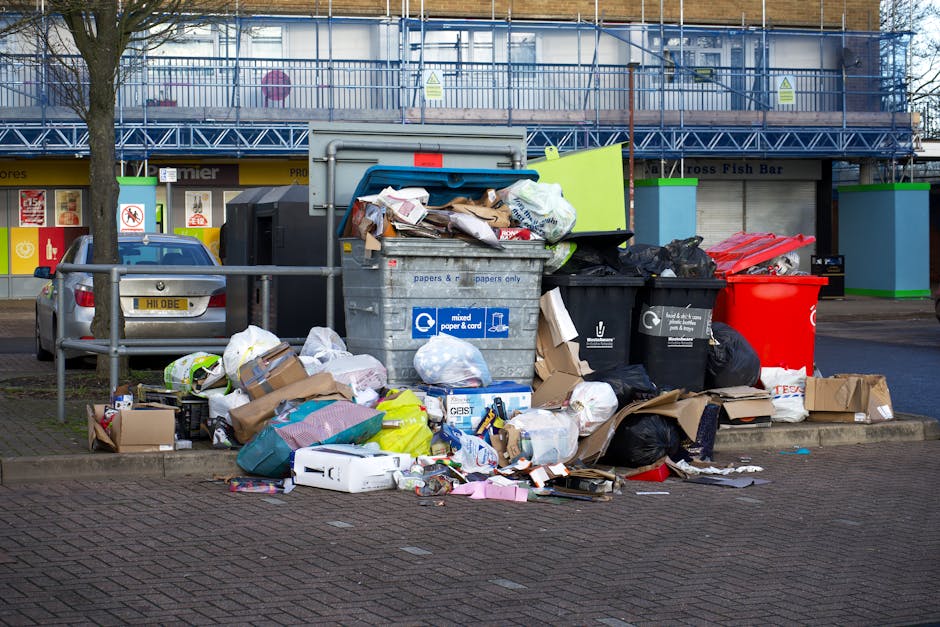
Licensing for commercial rubbish collectors in Elephant and Castle
If you need waste taken away from a shop, office, building site, or managed property, licensing for commercial rubbish collectors in Elephant and Castle is one of those details that can save you a proper headache later. It is not the glamorous part of waste removal, let's face it, but it is the part that protects your business from fines, fly-tipping trouble, and awkward questions from landlords or site managers. In a busy London area like Elephant and Castle, where access is tight and waste moves fast, knowing who is licensed, what that licence means, and how to check it is practical knowledge, not bureaucracy for the sake of it.
This guide breaks the topic down in plain English. You will get a clear explanation of how commercial rubbish collection licensing works, what to look for in a provider, where the risks usually sit, and how to make a sensible decision without overcomplicating things. If your waste comes from an office move, a refurbishment, a retail clear-out, or a regular business collection, this should help.
Why Licensing for commercial rubbish collectors in Elephant and Castle Matters
Commercial rubbish collection is regulated because waste does not disappear by magic. Someone has to carry it, sort it, transfer it, and dispose of it responsibly. If the wrong operator handles your waste, the consequences can land back with you, especially if your business handed it over without doing basic checks.
In Elephant and Castle, that matters for a few reasons. First, the area is dense and constantly moving: offices, flats, shops, cafes, construction activity, and refurbishment work all generate waste. Second, streets and access points can be awkward, which means collections are often scheduled quickly and with little room for error. Third, business waste is not the same as a household tip run. There is a chain of responsibility, and you do not want to be at the wrong end of it.
A licensed commercial rubbish collector is expected to operate within the rules that apply to waste carriage and disposal. In practice, that usually means the business has the right registration or authorisation for carrying waste, follows safe handling practices, and can show evidence of proper disposal routes. The exact paperwork can vary depending on the type of waste and the operator's role, so a cautious, check-first approach is always the right one.
Key takeaway: if the collector looks cheap but cannot show clear licensing and documentation, the saving is rarely worth the risk.
There is also a reputational angle. A business in Elephant and Castle that uses a poor waste operator may end up dealing with complaints, staff delays, blocked loading bays, or rubbish left outside at the worst possible time. Nobody wants that smell drifting out on a Monday morning while customers are walking past. Not ideal.
How Licensing for commercial rubbish collectors in Elephant and Castle Works
At a practical level, licensing for commercial rubbish collectors is about proving that a waste carrier is legally allowed to collect and transport waste. For most readers, the key point is simple: do not assume any van with a driver and a logo is operating properly.
Here is how the process usually works in real life:
- The business identifies the waste type. General office waste, builders' rubble, furniture, mixed bulky waste, and potentially hazardous material all call for different handling expectations.
- The operator confirms collection scope. A genuine collector should explain what they can take, how it will be loaded, and whether they need extra information about access, lifting, or segregation.
- Licensing and registration are checked. You should expect the operator to be able to show the relevant waste carrier details or equivalent proof of authority for the service they provide.
- Collection is documented. Good operators keep records, issue paperwork where needed, and make it easier for you to show that waste was transferred responsibly.
- Waste is taken to an approved route. That may involve a transfer station, recycling facility, reuse channel, or other lawful destination depending on the material.
The exact documentation you need can depend on your business setup and the type of waste involved. For straightforward commercial waste removal, a basic record trail may be enough. For larger clearances, construction waste, or mixed loads, the paper trail becomes more important. If you are using a service like business waste removal or arranging a broader waste removal service, it is worth asking how they handle compliance before the first collection turns up.
In busy areas such as Elephant and Castle, timing matters too. A collector may be licensed, but if they cannot actually manage the collection safely or on time, the experience is still poor. Licensing is the baseline; service quality is the rest of the picture.
Key Benefits and Practical Advantages
Licensing is not just about ticking a legal box. It has real day-to-day value for businesses, landlords, and site managers.
- Lower risk of fly-tipping fallout: if waste is dumped illegally by an unlicensed operator, your business may still be drawn into the enquiry.
- Better accountability: licensed collectors are easier to trace, challenge, and verify.
- Smoother audits and records: proper documentation helps if your business ever needs to show where waste went.
- More reliable handling: operators who understand the rules tend to work more carefully on loading, segregation, and transfer.
- Stronger trust with building managers and landlords: especially useful in managed offices, mixed-use premises, and residential blocks with commercial tenants.
There is a softer benefit too: peace of mind. Once you know the collector is properly set up, you stop worrying about what happens after the van leaves. That is worth a lot. Truth be told, most business owners already have enough on their plate.
Licensing also tends to correlate with better operational habits. A proper waste business is more likely to talk clearly about access restrictions, lifting requirements, paperwork, and safe disposal. For example, if you are clearing office furniture as part of a larger move, a company that can also advise on office clearance and recycling routes will often save time and reduce disruption.
Who This Is For and When It Makes Sense
This topic matters if you are responsible for any waste generated by a business, trade, or managed property in Elephant and Castle. The most common situations include:
- office managers clearing desks, chairs, archive waste, or refurbishment debris
- shop owners removing packaging, shelving, and old stock
- landlords and letting agents dealing with abandoned items after a tenancy change
- builders and contractors moving waste off a small or tight site
- facilities teams arranging regular collections for mixed commercial rubbish
- business owners who simply do not want waste hanging around the back entrance for days
It makes sense whenever the volume is too large for ordinary bin collections, the items are too bulky for staff to handle alone, or the waste includes materials that need proper segregation. If you are dealing with post-refit clutter, broken fittings, or heavier items, the same principles apply whether the job is an builders waste clearance or a simple shop back-room emptying.
And if you are clearing furniture, odd fittings, or mixed contents from a flat or home above street level, licensing matters just as much. You may be arranging flat clearance, house clearance, or even home clearance, but the legal and practical standards still sit behind the scenes.
If you are wondering whether the issue is really worth worrying about for a small job: yes, usually it is. A single dodgy collection can create a disproportionate mess of admin later. Why invite that?
Step-by-Step Guidance
Here is a practical way to handle licensing checks without making the process feel like homework.
- Describe the waste accurately. List the main materials, approximate volume, and whether anything is heavy, sharp, damp, dusty, or potentially hazardous.
- Ask who is carrying the waste. Do not just ask if they can collect it. Ask how they are licensed or registered to transport it and whether they can provide the details in writing.
- Request the disposal route in plain English. You do not need a lecture. You do need a sensible explanation of where the waste is likely to go and how reusable or recyclable items are handled.
- Check the paperwork process. Find out whether you will receive a transfer note, invoice reference, or other record that links your business to the collection.
- Confirm insurance and safety practices. Licensing is one thing; adequate insurance and safe loading methods are another. They matter together.
- Agree timing and access details. Elephant and Castle is not the place for vague arrival windows if loading space is limited.
- Keep your own records. Store the quote, job notes, and any collection paperwork in one place. Future-you will be grateful.
If the job is linked to workplace furniture or old cabinets, it may also help to review service details for furniture clearance or furniture disposal so you understand what is being removed and how reusable items are treated.
A small real-world tip: before collection day, walk the route from the street to the waste point. You will often spot problems early - a locked gate, a narrow stairwell, a cracked lift, a basement turn that makes bulky waste awkward. Better to know at 4 p.m. the day before than at 8 a.m. with a van waiting outside.
Expert Tips for Better Results
In our experience, the best waste collections are the ones with boringly good preparation. Not exciting, but very effective.
- Separate reusable items from true rubbish. If something can be reused, repaired, or donated, say so. That can improve environmental outcomes and sometimes reduce disposal costs.
- Be specific about commercial waste streams. Mixed loads are harder to price and manage. Cardboard, wood, metals, and general rubbish should be identified where possible.
- Ask about recycling rates carefully. Avoid anyone making dramatic claims with no explanation. A trustworthy collector will talk plainly about sorting, reuse, and recycling routes.
- Match the collection size to the job. One overfilled vehicle and three return trips is rarely efficient. Better to plan the right capacity from the start.
- Book early if access is restricted. Side streets, timed loading restrictions, and busy pavements can add pressure. A little notice goes a long way.
- Keep your team briefed. Reception staff, cleaners, and facilities teams should know what is leaving, who is collecting it, and which items must stay put.
If sustainability is part of your business values, look closely at how the collector approaches sorting and reuse. A good provider will usually be able to explain their recycling and sustainability approach without sounding rehearsed. If you want a broader sense of how a company frames that side of the service, you may also find its recycling and sustainability information helpful.
Expert summary: The safest choice is not always the cheapest quote. It is the one that can prove licensing, explain the waste route clearly, and handle the collection without creating new problems.
Common Mistakes to Avoid
Most licensing issues come from rushing. That is usually where the trouble starts.
- Choosing a collector on price alone. Cheap can be fine, but cheap with no proof of licensing is a gamble.
- Not checking what is actually included. Some quotes cover uplift only, while others include loading, labour, segregation, or extra handling.
- Failing to describe the waste properly. If the collector turns up expecting light office waste and finds builders' rubble, everyone loses time.
- Assuming all waste carriers are the same. They are not. Experience, paperwork, and compliance habits vary a lot.
- Leaving waste outside without a collection plan. In a busy neighbourhood, that invites complaints and can create a safety issue.
- Ignoring insurance and site safety. Licensing does not cover everything. A collector still needs to work safely in real spaces.
One subtle mistake is assuming the business client is automatically "off the hook" once the waste leaves site. That is not a comfortable assumption, and it is not a wise one either. Always retain the paperwork and make sure the operator is legit.
Another one? Forgetting that a tidy handover matters. If the waste area is blocked, unlit, or not labelled, even a licensed collector can struggle. The job gets done slower, and sometimes messier. Nobody wants to be tiptoeing around half-dismantled shelving at 6 p.m.
Tools, Resources and Recommendations
You do not need a complicated toolkit for this, but a few simple resources make the process far easier.
- Waste inventory list: a quick spreadsheet or note with item types, quantities, and special handling needs.
- Photo record: a few clear pictures of the waste area and contents can prevent misunderstandings.
- Collection checklist: useful for reception teams, facilities staff, or contractors handing over the waste.
- Document folder: keep quotes, invoices, job notes, and transfer records together.
- Internal policy notes: for offices and managed buildings, a simple waste procedure helps staff know who to contact.
If your waste sits within a wider business clearance, it can also help to compare the service type with other related pages such as office clearance, business waste removal, and, where relevant, builders waste clearance. That is not about browsing for the sake of it; it is about making sure you are choosing the right operational model for the actual job.
If you are comparing providers, ask yourself a few simple questions: Can they explain licensing clearly? Do they sound organised? Do they ask sensible questions back? If the answer is yes, you are probably dealing with someone who has done this before.
Law, Compliance, Standards, or Best Practice
Waste collection and transportation are regulated activities in the UK, and commercial waste is treated more carefully than casual domestic clear-outs. The exact duties can depend on the type of waste, who produces it, who transports it, and what records need to be retained. So while it is sensible to understand the general picture, it is better not to guess at the edge cases.
In plain terms, good practice usually means the following:
- the waste carrier is properly authorised for the work they are doing
- the customer can see evidence of that authorisation where appropriate
- waste is described honestly and handled according to type
- records are kept for accountability
- the collector follows safe loading and transport procedures
- reusable and recyclable materials are separated where practical
For businesses, there is also a duty of care mindset. You should make reasonable checks before handing over commercial rubbish. That does not mean becoming a legal specialist overnight. It does mean asking the right questions, keeping the paperwork, and not outsourcing your common sense.
In Elephant and Castle, this matters across offices, retail units, flats with commercial tenants, and construction-adjacent properties. The more mixed the building, the more important it is to know exactly what is being removed and who is responsible for it.
If a provider talks confidently about its health and safety policy, insurance and safety, and complaints handling, that is usually a good sign. It shows the business thinks beyond the collection itself and understands the wider job.
Options, Methods, or Comparison Table
Not every waste job needs the same approach. Here is a simple comparison to help you think it through.
| Option | Best for | Strengths | Watch-outs |
|---|---|---|---|
| Licensed commercial waste collector | Regular business waste, bulky items, mixed collections | Clear compliance, professional handling, easier records | Price varies by volume, access, and waste type |
| One-off clearance service | Office moves, shop refits, occasional bulk rubbish | Simple for ad hoc jobs, less admin for the client | Needs accurate description to avoid surprises |
| Specialist builders waste service | Construction and refurbishment debris | Useful for heavy, dusty, awkward materials | May not suit mixed office or retail waste |
| Furniture-focused clearance | Desks, chairs, cabinets, shop fittings | Good for reuse, disposal, and bulky handling | May need extra planning for stairwells and access |
The right option depends on what is actually on site. If the load is mostly desks and chairs, a furniture-led service may be enough. If it is mixed rubbish plus fixtures, a broader waste solution is often better. For some readers, that means a more specific route like furniture clearance; for others, the right fit may be a more general waste collection model.
Case Study or Real-World Example
A small office team in Elephant and Castle is a good example. They are leaving a second-floor space after a lease ends. The room contains broken task chairs, a couple of filing cabinets, cardboard packaging, and some mixed rubbish from a recent IT tidy-up. Nothing dramatic, just the sort of job that tends to expand if nobody takes ownership.
The facilities manager gets three quotes. One is cheap but vague. One is polished but says very little about licensing. The third asks useful questions: how many floors, is there lift access, what kind of furniture, are any items reusable, where can the vehicle stop, and does the client need records for the landlord. That last one feels more grounded.
Before booking, the manager checks that the collector can show appropriate waste carrier details and that they have a clear process for handling commercial waste. The team separates obvious reuse items from genuine rubbish, labels the collection point, and clears the route. On collection day, the job is tidy, the paperwork is straightforward, and the handover takes less time than expected.
Nothing glamorous happened. Which, honestly, is usually the sign of a well-run collection. No arguments, no mystery surcharge, no bags left in the corridor. Just done.
Practical Checklist
Use this before you confirm a collection.
- Have you described the waste accurately?
- Do you know whether the items are general waste, furniture, builders' waste, or mixed commercial rubbish?
- Has the collector explained their licensing or authorisation clearly?
- Do you know what paperwork you will receive after collection?
- Have you checked insurance and safety arrangements?
- Is access clear for staff, residents, or the collection vehicle?
- Have reusable items been separated where practical?
- Have your reception or facilities teams been told what to expect?
- Have you kept a copy of the quote and any collection notes?
- Do you know who to contact if the job changes on the day?
Practical summary: the best collections are the ones where the waste is described well, the paperwork is tidy, and nobody is guessing on the day.
If you are arranging a larger commercial move or clearing multiple room types, you may also want to review related service information such as pricing and quotes before making a final decision. It helps keep expectations realistic, which is half the battle.
Get a free quote today and see how much you can save.
Conclusion
Licensing for commercial rubbish collectors in Elephant and Castle is not just a technical detail. It is the foundation of safe, responsible, low-drama waste handling for local businesses and property managers. Once you know what to ask, the process becomes much easier: check the licence or authorisation, understand the paperwork, confirm the waste route, and make sure the provider can operate safely in your space.
In a place as busy and practical as Elephant and Castle, the right waste collector should make life simpler, not more complicated. That is the standard to look for. Clear answers, tidy work, and no funny business.
And if you are still weighing up your options, take your time. A good decision here tends to pay for itself in peace of mind, which is never a bad return.
Frequently Asked Questions
Do commercial rubbish collectors in Elephant and Castle need to be licensed?
In most cases, yes, they need the correct authorisation or registration to transport waste legally. The important thing is to ask the operator how they are licensed and to keep a record of their details. Do not rely on appearance alone.
What should I ask before booking a waste collection?
Ask what type of waste they can take, how they are licensed, what paperwork you will get, how they handle recycling, and whether insurance is in place. If the answers are vague, that is usually a sign to pause.
How do I know if a waste collector is legitimate?
A legitimate collector should be able to explain their authority to carry waste, provide business details, and answer basic questions without dodging them. They should also sound comfortable talking about disposal routes and record keeping.
Is the cheapest quote usually the best choice?
Not usually. Price matters, of course, but the cheapest option can become expensive if the paperwork is weak, the waste type is misunderstood, or the collection creates delays. Value is a better test than price alone.
What kind of waste is common in commercial collections?
Typical loads include office furniture, packaging, mixed rubbish, old shelving, shop waste, and builders' debris. The exact mix depends on the business, but bulky items and mixed materials are very common in Elephant and Castle.
Do I need paperwork for a one-off collection?
Usually it is wise to keep some form of record, even for a one-off job. The level of paperwork may vary, but having a quote, invoice, and collection note makes life easier if anyone asks later where the waste went.
Can I use a general clearance service instead of a waste-only operator?
Sometimes, yes, if the service is set up to handle the waste type properly and can show the right authorisation. For example, a business might need office clearance rather than a simple bin-emptying service. The key is to match the provider to the actual job.
What if I am clearing furniture and rubbish together?
That is common. The collector should be told in advance so they can plan labour, vehicle space, and disposal route. Mixed loads are manageable, but only if they are described properly from the start.
How does this affect landlords or managing agents?
Landlords and managing agents should be careful about who they allow to remove waste from common areas or vacated units. Good records protect everyone involved and help avoid disputes if waste is mishandled later.
Does sustainability matter when choosing a collector?
Yes, especially if you want reusable items separated from rubbish and recyclable material handled responsibly. A collector with clear recycling and sustainability practices is often a better long-term partner, not just a one-off fix.
What is the biggest mistake businesses make?
The biggest mistake is usually failing to check the collector properly before handing over the waste. It takes only a few minutes to ask the right questions, and those few minutes can prevent a lot of trouble.
What is the next sensible step if I need a collection soon?
Make a quick list of the waste, note access details, and ask for a clear quote with licensing information included. If you want a smoother process, you can also review related service pages such as office clearance, business waste removal, and pricing before you decide. A calm, informed choice tends to work best.